
Finding Hidden Leaks That Are Not Beneath the Foundation
While concrete foundation slab leaks represent the most structurally hazardous plumbing issue in Melbourne, pressurized water lines and drainage networks run through numerous other building assemblies. Leaks frequently develop within wall cavities behind tiled shower enclosures, overhead in ceiling joists beneath second-story bathrooms, under kitchen sink cabinets, or outside along underground yard main supply lines.
Water follows the path of least resistance. A small pinhole inside an upstairs bathroom wall can run down vertical studs, travel along ceiling drywall, and drip into a downstairs living room ten feet away from the actual leak source. Guessing where the leak starts by punching exploratory holes in drywall causes unnecessary cosmetic damage and ballooning repair expenses. Our professional leak detection Melbourne service deploys calibrated electronic tools to identify the exact origin of water infiltration quickly and non-invasively.
Dealing With Unexplained Moisture or High Water Bills?
Our Melbourne technicians locate hidden leaks in walls, ceilings, and irrigation lines without tearing apart your home.
Common Hidden Leak Locations Across Melbourne Properties
Our specialized diagnostic equipment accurately isolates leaks in diverse residential locations:
- Interior Drywall & Partition Walls: A water leak in wall Melbourne homes experience often results from aging copper sweat joints, vibrating laundry supply lines, or loose shower valve escutcheons weeping moisture behind tile backer board.
- Ceiling Joists & Second-Story Assemblies: Hidden pipe failures in upstairs bathrooms or overhead attic runs that soak ceiling drywall and insulation.
- Under Kitchen & Vanity Cabinets: Slow seepages from garbage disposals, reverse osmosis systems, dishwasher supply feeds, or angle stop valves that rot cabinetry flooring and foster mold growth.
- Municipal Supply Line & Yard Lines: A yard water line leak Melbourne property owners face occurs between the municipal street meter and the house foundation. Shifting sandy soil, invasive tree roots, or vehicle weight can crack underground PVC or poly supply pipes, causing wet lawn depressions and massive water loss.
- Irrigation & Sprinkler Supply Headers: Leaking underground sprinkler manifolds and master valves that waste thousands of gallons monthly.
Signs of a Hidden Leak: When to Investigate
Because hidden leaks remain concealed behind architectural finishes, property owners should watch for these telltale warnings:
- A sudden high water bill leak Melbourne notice: Receiving an unexpected alert or billing statement from Melbourne Utilities showing doubled or tripled monthly water usage.
- Musty mildew smells and indoor humidity: An unpleasant, persistent damp odor in bedrooms or closets without visible water accumulation.
- Stained, blistered, or peeling drywall: Discoloration or bubbling paint on walls and ceilings indicating active moisture intrusion behind the surface.
- Sound of running water with fixtures closed: A faint hissing or dripping sound behind walls when all household faucets and toilets are inactive.
- Unexplained lush green grass patches: Unusually spongy or overgrown patches of grass along the path of the underground water service line in your yard.
Non-Invasive Diagnostic Technology
Our Melbourne leak specialists utilize advanced diagnostic technologies to locate hidden water breaches without destructive tearing:
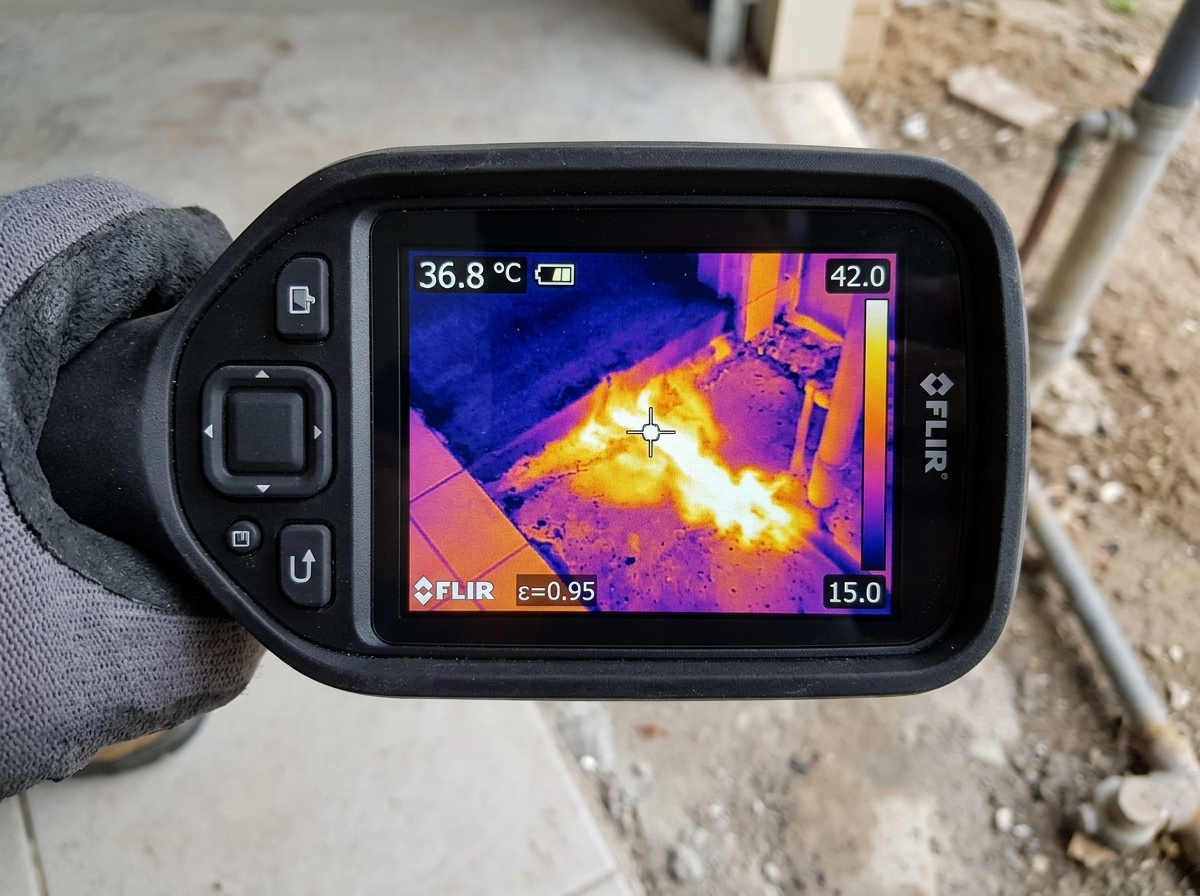
- High-Sensitivity Infrared Thermal Cameras: Thermal imaging instantly detects the temperature differentials created by evaporating water and expanding dampness inside enclosed wall and ceiling cavities.
- Non-Destructive Pinless Moisture Meters: Calibrated electronic moisture meters measure radio frequency impedance to evaluate moisture content within drywall, baseboards, and subflooring without leaving pinholes.
- Acoustic Pipe Listening Probes: High-gain frequency filters allow technicians to listen through sheetrock and tile to detect the sound of water spraying or dripping from concealed pipe joints.
- Electronic Line Tracers: Electromagnetic transmitters identify the exact route of subterranean yard lines and hidden wall piping runs.
When and How to Shut Off the Main Water Line
If you observe active water dripping from ceilings, pooling along baseboards, or a municipal meter spinning rapidly, immediate shutoff prevents catastrophic sheetrock collapse and mold proliferation:
- Locate your main water shutoff valve. In Melbourne homes, this is typically an exterior brass ball valve or gate valve located near the front hose bib where water enters the home, or inside the utility garage near the water heater.
- Turn the handle clockwise (for wheel valves) or perpendicular to the pipe (for quarter-turn ball valves) until water flow ceases completely.
- Open an exterior hose bib or lowest sink faucet to relieve residual hydraulic pressure from household lines.
- Contact our emergency diagnostic dispatch at (888) 205-7875 to coordinate non-invasive location and professional repair.
If diagnostic testing reveals the leak is actually located beneath your home's concrete foundation, our team provides seamless transitions to specialized slab leak repair in Melbourne, precise electronic slab leak detection, or overhead slab leak rerouting. We also help coordinate carrier reports via our insurance documentation guide across our local Brevard County service areas.
Schedule Professional Water Leak Detection
Call our Melbourne team today to locate hidden wall, ceiling, and yard water leaks accurately.